


Bildung Nijmegen in Romania: Learning, Collaboration and Global Education

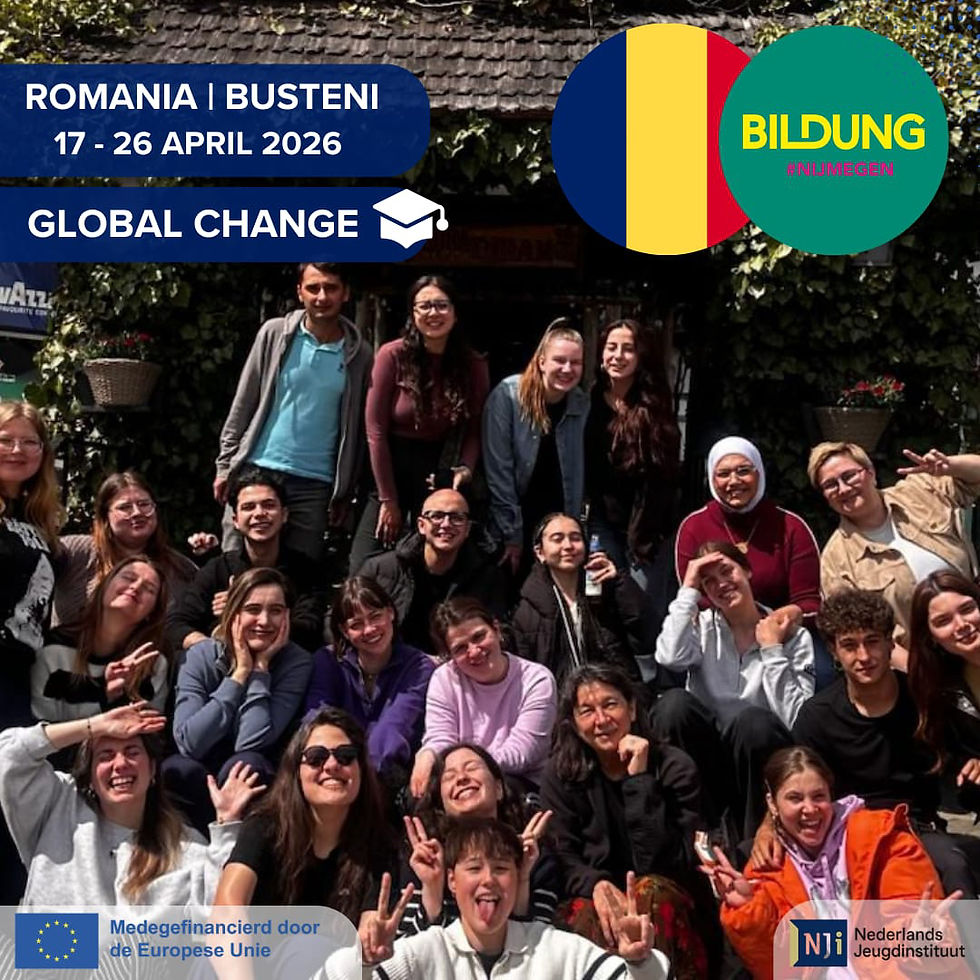
From 17 to 26 April 2026, Abdulrahman took part on behalf of Bildung Nijmegen in Train for Global Change, an international Erasmus+ training course on Global Education in Bușteni, Romania.
The training brought together educators, youth workers and facilitators from different countries to explore how global themes can be made understandable, creative and meaningful for young people and local communities. For Bildung Nijmegen, this connected strongly with the work we do in Nijmegen and across Europe: creating spaces where young people can learn, reflect, meet others and become more aware of their role in society.
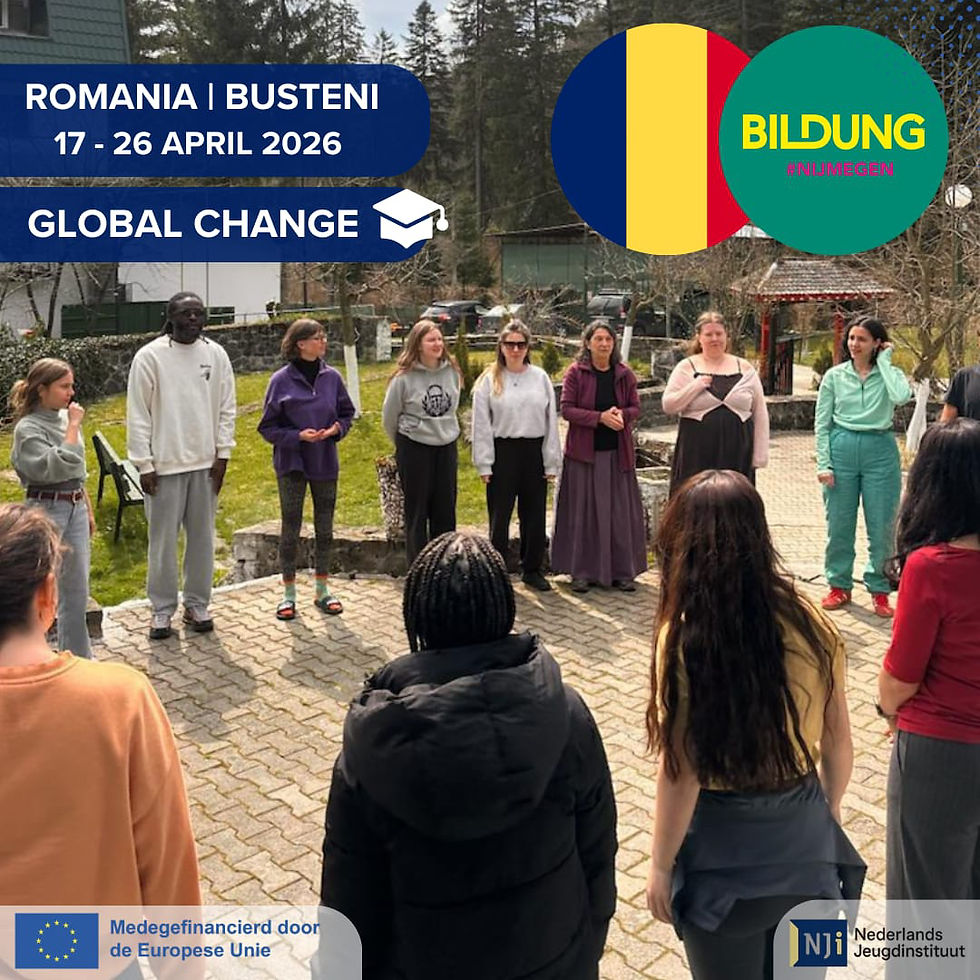
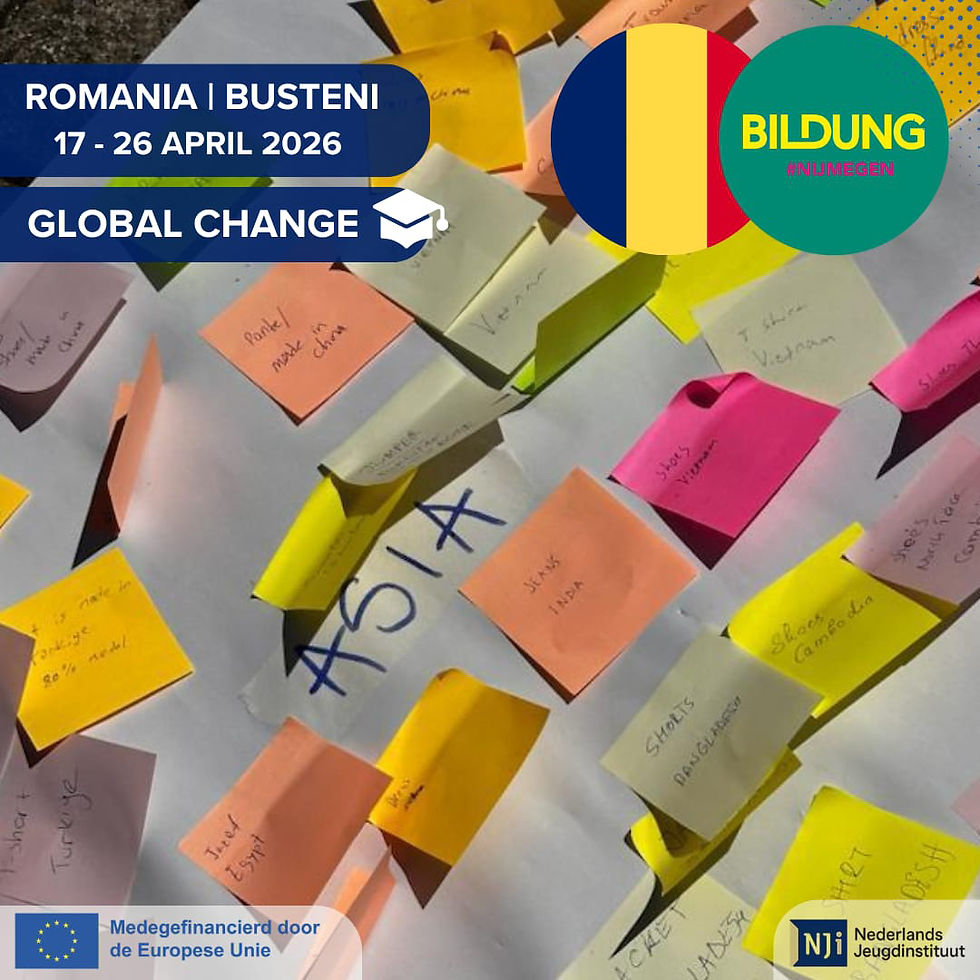
Throughout the programme, participants worked with different non-formal learning methods. They did not only talk about Global Education, but also experienced it in practice. Through interactive exercises, group assignments, role play, research-based activities and workshop design, they explored topics such as sustainability, greenwashing, e-waste, social responsibility and the connection between local choices and global challenges.
One of the most valuable parts of the training was the international teamwork. Participants worked in multicultural groups to develop and deliver their own workshops. This made collaboration very real: listening to each other, dealing with different perspectives, making shared decisions and learning how to turn ideas into something practical.
As Abdulrahman, participant from Bildung Nijmegen, reflected:
“It was great to learn new tools, test them in practice, and experience what collaboration really means in the context of Global Education.”
For us, this quote captures the heart of the project. Non-formal learning is not only about receiving information. It is about doing, trying, reflecting and learning together. It is about creating an environment where people can ask questions, make mistakes, discover new perspectives and build something collectively.
The training in Romania gave us new tools, inspiration and insights that we can bring back into our local and international work. Within our projects, we often work with young people around themes such as participation, identity, sustainability, citizenship, inclusion and intercultural dialogue. The experiences from Train for Global Change will help us make these themes even more accessible, creative and engaging.
For Bildung Nijmegen, Global Education is not an abstract idea. It is about bringing the world closer. It helps young people understand that their voices, choices and ideas matter, and that local realities are connected to broader social and global developments.
We look back on this training with gratitude. Projects like this show the value of European cooperation: not only because they bring people from different countries together, but because they create space for real learning, honest dialogue and shared growth.
Train for Global Change was an inspiring experience for Bildung Nijmegen, and one we will continue to carry into our work with young people, educators and communities in Nijmegen and beyond.




Comments